Introducing Covenant Presbyterian Church

By Pastor Tom Troxell

What we believe…

We are a Presbyterian Church, which means we are governed by Elders. The Elders, along with the Pastor, make up the church Session. Being Presbyterian also means that we are connectional. Churches are grouped geographically into Presbyteries, and the Presbyteries together form the General Assembly. Presbyteries meet several times a year and the General Assembly meets annually.
Covenant Presbyterian Church is Reformed in doctrine, which means we hold to the faith of the Protestant Reformation as outlined in these five Sola statements:

Sola Scriptura (Scripture Alone): We believe the Bible is the inerrant Word of God; the only standard of our faith and practice. It alone shows us the way to be reconciled to God.

Solus Christus (Christ Alone): We believe our salvation is accomplished by the work of Jesus Christ alone. His sinless life and substitutionary death are the only means for reconciliation with God.

Sola Gratia (Grace Alone): We believe God’s grace alone provides salvation for humankind. Salvation is a gift; it can not be earned, and is not deserved.

Sola Fide (Faith Alone): We believe the benefits of Jesus’ work are appropriated only through faith.

Soli Deo Gloria (To God Alone the Glory): We believe God alone deserves glory in our salvation and in our lives.

Our History…

Covenant Presbyterian Church began as a Bible Study in 1978. The first service was held in the old Western Savings building in Sun City on February 4, 1979. The Rev. Don Esty was called as first pastor shortly thereafter, and the congregation was organized as a mission church.

The congregation moved to the R. H. Johnson Recreation Center, Sun City West, in 1980. In 1981 the church changed from being a mission church to being fully organized. In December 1982 the present church site was secured and the present Auditorium was dedicated on May 10, 1987. The Fellowship Hall was completed in late 1992. The Auditorium was refurbished in the summer of 2007.

Rev. Tom Troxell is the third installed pastor in Covenant’s history. He was part time from January 1999 through June 2000. On July 1, 2000 he came to Covenant full time.
Our Denomination…
The Presbyterian Church in America (PCA) has its historical roots in the Reformation. However, the PCA began as a separate denomination in 1973 when elders, ministers and church members met in Birmingham, Alabama to form a new denomination, true to the elements of Biblical Presbyterianism. In 1982 the Reformed Presbyterian Church, Evangelical Synod (RPC, ES) joined the PCA, bringing with it a college, a seminary and many missionaries. For 2007, The Presbyterian Church in America reported 76 Presbyteries, 1,666 organized churches and missions (in all 50 states) and 345,000 members. In 2007 giving in PCA congregations totaled $683 million dollars. The PCA has 590 long term missionaries and 476 short term missionaries. Reformed University Ministries now works on 102 campuses in the USA and overseas.
The PCA is a confessional denomination, still adhering to the great creeds and doctrines of the Protestant Reformation. We believe these creeds express the system of doctrine set forth in the Bible; and we believe the best expression of this Reformation faith is found in the Westminster Confession of Faith and Catechisms. These are, along with the Book of Church Order, the subordinate standards of the church. Other Reformed Confessions include The Heidelberg Catechism, the Belgic Confession, the Canons of Dort [Reformed], the London and Philadelphia Confessions [Baptist], the Savoy Declaration [Congregational], and the original Thirty-Nine Articles of the Church of England [traditional Anglican].

We teach a Biblical World and Life View, striving to teach people how to live in this world by using the Bible as the “spectacles” through which all of life is to be viewed and lived.

We believe that God is sovereign over all things, and that He alone is deserving of our worship. Thus we worship in a manner that utilizes the many gifts of the congregation; worship that is conducted with simplicity, elegance and dignity.

http://www.covenantsuncitywest.org/

Le printemps me prend dans ses bras

Le printemps me prend dans ses bras
Et m’entoure avec les fleurs de cerisier,
L’encre coule dans mes veines
Avec la couleur des nuages collectionés

Du crepi vert sur le ciel.
J’entends le jardin bouillant,
Les fenêtres transpirent dans la pluie,
L’air est embaumé en or et en argent.

La terre sirote de sa coupe,
Je fraye un chemin dans tes yeux,
Qui rendent vert à côte de fenêtre,
Ils sont comme les petales d’une glace.

Je saupoudre des caresses dispersées
Sur les épaules des roches de granite,
Je te claqemure dans un baiser immaculé,
Dans la fraicheur matinale agreable.

Tatiana Scurtu-Munteanu

Post Traumatic Stress Disorder in Veterans of Operation Iraqi Freedom

By Mathew J. Kleinhans
Woodland Community College

The war in Iraq is the most sustained combat operation since the Vietnam War, and initial signs show that this ongoing war is likely to produce a new generation of veterans with chronic mental health problems associated with participation in combat. Many of the challenges facing the soldiers in Iraq are stressors that have been identified and studied in veterans of previous wars (e.g., fear for own life, participation in killing). This war in Iraq is no different in that it also presents challenges that impact the mental health problems facing soldiers today and possibly throughout the remainder of their lifespan. In fact, I have a close friend who served three tours in Iraq who is dealing with a mental health issue called post traumatic stress disorder which he has suffered from since leaving the Marines.

Post-traumatic stress disorder (PTSD) is an anxiety disorder that may develop after an individual is exposed to one or more traumatic events. During war military service members are exposed to a number of potentially traumatic events — ones in which the individual’s life is in critical danger, he or she is seriously injured, and/or there is a threat to physical integrity, either to one’s self or to others (Maguen, S. 2008).

What are the mental health impacts of the war in Iraq? One of many comprehensive studies has examined the mental health impact of the wars in Afghanistan and Iraq. The New England journal of medicine ran a piece in 2004 regarding soldiers combat duty in Iraq and Afghanistan, and the mental health problems that can occur from such duty. This particular study evaluated soldiers’ reports of their experiences in war-zones and reports about symptoms of psychological distress. The results of this study indicated that the estimated risk for posttraumatic stress disorder (PTSD) in soldiers from service in the Iraq War was 18% (Hoge et al. 2004).

My friend, Corporal Richie Gunter enlisted in the United States Marine Corps in November 2002 at the unusually older age of 27 years old. In March of 2003, he along with his Company, Bravo Company, of the 1st Battalion 5th Regiment Infantry Marines, were deployed to Iraq and were the spear of the initial surge into Baghdad. Over the course of the next four years Ritchie completed his initial tour and was called back two more times, totaling three tours in Iraq within just four years of service. In a personal interview with Richie Gunter on November 10, 2008 he stated, “I witnessed numerous incidents of death, mayhem, and utter chaos…fucking chaos (R. L.Gunter, personal interview, November 10, 2008).” In November 2006, four years after enlisting, Richie got out of the Marines and one month later was diagnosed with PTSD.

Other studies indicate that more frequent and more intense involvement in combat operations increases the risk of developing chronic PTSD and associated mental health problems. Initial evidence indicates that combat operations in Iraq are very intense (Anderson, P. 2008). Soldiers in Iraq are at risk for being killed or wounded, are likely to have witnessed the suffering of others, and a majority of these soldiers have participated in killing or wounding enemies and/or civilians as part of combat operations. All of these activities have an association with the development of PTSD.

Symptoms of PTSD most often begin within three months of the event. In some cases, however, they do not begin until years later. The severity and duration of the illness vary. Some people recover within six month, while others suffer much longer (Chakraburtty, MD, Amal, comp. 2007). Symptoms of PTSD are normally grouped into three main categories: Re-living, avoiding, and increased arousal.

Chakraburtty (2007) describes that in a re-living scenario, people with PTSD repeatedly re-live the ordeal through thoughts and memories of the trauma. These may include flashbacks, hallucinations and nightmares. They also may feel great distress when certain things remind them of the trauma, such as the anniversary date of the event. From an avoiding aspect, the person may avoid people, places, thoughts or situations that may remind him or her of the trauma. This can lead to feelings of detachment and isolation from family and friends, as well as a loss of interest in activities that the person once enjoyed. In the case of increased arousal, these scenarios include excessive emotions; problems relating to others, including feeling or showing affection; difficulty falling or staying asleep; irritability; outbursts of anger; difficulty concentrating; and being “jumpy” or easily startled. The person may also suffer physical symptoms, such as increased blood pressure and heart rate, rapid breathing, muscle tension, nausea and diarrhea.

Two years later, after being diagnosed and treated, Richie still struggles with “Re-living” PTSD. He stated, “It’s not as bad now as it was in 06, but I still have extremely lucid nightmares that I can’t seem to suppress. The worst ones are the nightmares of the friends that I lost. My buddy Jeff Starr, Pfc Torres– I can name a bunch of names right now, you know, those are guys that I hung out with a lot… and they’re gone. I witnessed a lot of gnarly shit…Shit most people wouldn’t even be able to fathom” (R. L. Gunter, personal interview, November 10, 2008).

Hoge et al. (2004) indicated that 94% of soldiers in Iraq reported receiving small-arms fire. In addition, 86% of soldiers in Iraq reported knowing someone who was seriously injured or killed, 68% reported seeing dead or seriously injured Americans, and 51% reported handling or uncovering human remains. The majority, 77% of soldiers who were deployed to Iraq, reported shooting or directing fire at the enemy, 48% reported being responsible for the death of an enemy combatant, and 28% reported being responsible for the death of a noncombatant.

A variety of environmental factors specific to each mission may also contribute to the risk of mental health problems in veterans. For example, factors like poor diet, severe weather, and deficient accommodations will shape soldiers’ responses to war-zone deployments. Extensive time away from family members, and the disruption of occupational goals, may serve as severe stressors. Although, many soldiers may find meaning and gratification in their “care taking” roles in Iraq, which can potentially buffer the impact of some war-zone stressors.

What is the long-term prognosis for soldiers exposed to stressors in Iraq and diagnosed with PTSD? Extensive research indicates that early distress and symptoms of PTSD are not very good predictors of a long-term prognosis. Thus, while Hoge et al. (2004) reported that 18% of soldiers newly redeployed from Iraq have PTSD, it is likely that this rate will decrease over time. Compared to the 10% of Gulf War veterans that suffer from PTSD (Hogan, PhD, Michael F., ed.), the difference is noticeable. The Hoge et al. (2004) study suggests that in the face of severe military service demands, including combat, most men and women do remarkably well across the lifespan. On the other hand, if the mission is experienced as a failure, if soldiers deploy more than once, if new veterans who need services do not get the support they need, or if post deployment demands and stressors mount, the lasting mental health toll of the wars in Iraq may increase over time. “I did the whole head shrink and Ambien treatment for about a year and it did help, but I just had a hard time talking to someone who I felt couldn’t even begin to grasp what I’d been through without actually going through it himself. After about a year of treatment, I decided to deal with it myself. I was back full time with the farm, my time was occupied and I guess I had a different type of therapy. Work. I’ve just learned to live with the nightmares (R. L. Gunter, personal interview, November 10, 2008).”

For those soldiers who don’t recover, the most troubling aspect of military-related PTSD is its chronic course. There is evidence that once veterans develop military-related PTSD their symptoms remain chronic across the lifespan and are resistant to treatments that have been shown to work with other forms of chronic PTSD (Dryden – Edwards, R. n.d.). With that being said, it is extremely important to provide early intervention to reduce the risk of chronic impairment in veterans. However, there are troubling signs that many soldiers from are reluctant to seek help or that help may not be readily available to them. For example, Hoge et al. (2004) found that although approximately 80% of Iraq soldiers who had a serious mental health disorder acknowledged that they had a problem; only approximately 40% stated that they were interested in receiving help and only 26% reported receiving formal mental health care. It appears that modern career soldiers are concerned about the stigma associated with mental health problems and the potential negative impact on their careers or social status.

There is much that is still unknown about how soldiers adjust to the enormous demands in today’s new war zones. It is important to appreciate the stressors and traumas of these new wars in order to raise the awareness of civilians back home, prepare loved ones for soldiers return, and meet the clinical needs of our newest veterans.

References

Anderson, Pauline. “Combat, Deployment, Increases Risk for Posttraumatic Stress Disorder.” Medscape Today. 15 Jan. 2008. Medscape Medical News. 27 Nov. 2008 <http://www.medscape.com/viewarticle/568951&gt;.

Chakraburtty, MD, Amal, comp. “Mental Health: Post-Traumatic Stress Disorder.” WebMD. 1 Mar. 2007. 27 Nov. 2008 <http://www.webmd.com/anxiety-panic/guide/post-traumatic-stress disorder>.

Dryden – Edwards, Roxanne. “Posttraumatic stress disorder.”Medicinenet.com. Ed. Melissa Conrad Stoppler. 4 Nov. 2008 <http://www.medicinenet.com/posttraumatic_stress_disorder/article.htm&gt;.

Hogan, PhD, Michael F., ed. “Post-Traumatic Stress Disorder.” Office of Mental Health. July 2008. 27 Nov. 2008 <http://www.omh.state.ny.us/omhweb/booklets/ptsd.htm&gt;.

Hoge, Charles W., Carl A. Castro, Stephen C. Messer, Dennis McGurck, Dave I. Cotting, and Robert L. Koffman. “Combat Duty in Iraq and Afghanistan, Mental Health Problems, and Barriers to Care.” The New England journal of medicine 351 (2004): 13-22. NEJM. 4 Nov. 2008 <http://content.nejm.org/cgi/content/full/351/1/13&gt;.

Maguen, Shira. “Posttraumatic stress disorder.” POV. 14 Oct. 2008. 4 Nov. 2008 <http://www.pbs.org/pov/pov2008/soldiersofconscience/special_ptsd.html&gt;.


Gender Differences and Self Actualization – Psychology 33

There are numerous differences between the behaviors of males and females. Some of these differences are biological and others are driven by society and/or culture. Regardless of how the differences originate, there’s no denying the fact that there is indeed a difference between heterosexual/homosexual males and females.

A substantial portion of these differences are constructed during a process called sexual differentiation. Sexual differentiation occurs soon after conception at the six week of gestation and is considered a critical period. During the six week, reproductive organs are forming on the undifferentiated zygote. As the zygote is approaching the fetal stage it produces a wolfian duct and a mullerian duct, which with further development, will differentiate whether the fetus will become a male, female, or in some cases hermaphrodite (having both male and female reproductive organs). If the semen upon conception contains the male Y chromosome, the wolfian duct will be exposed to testosterone, triggering androgen receptors, eventually producing male reproductive organs. If the exposure of testosterone does not occur, the wolfian duct will regress resulting in the development of female reproductive organs.

As male and female reproductive organs are different, the brains of both males and females are extremely different as well. In most cases, girls are more verbally fluent and better with language skills than boys, but males are usually better at spatial calculation and directions. The development of the male and female brain occurs during a critical period similar to the reproductive organs; this occurs during the 12 week of gestation.

During this time, the fetus is being bombarded by hormones such as testosterone, androgen, and/or estrogen. These hormones will play a substantial part in the development of the fetal brain. High levels of testosterone will result in a larger hypothalamus, which is an important portion of the brain during this period, because it is a part of the brain that controls human arousal and sexual urges. In heterosexual men, the INAH-3 (Interstitial Nucleus of the Anterior Hypothalamus) of the hypothalamus can be, and usually is, up to two times larger than that in women; inevitably deciding an individual’s sexual orientation in most cases. Some studies have shown that brains with smaller amounts of INAH-3 are present in a majority of homosexual men. Thus, confirming that the amount of INAH-3 in the hypothalamus plays a substantial part in the biological reasoning of sexual orientation, in most cases.

Sexual orientation is, on average, a biological reference to one’s sexuality: heterosexual, homosexual, or bisexual. Although there are biological factors that assist in creating this orientation, cultural and social factors can have a part in directing one’s sexual orientation as well.

In western cultures such as ours, society, culture and media can play a huge part in what’s considered “right or wrong” for boys and girls. In most cases, from the day babies are free from the womb, they’re labeled as being male or female. This can occur in many ways, but the most relevant is the flooding of specific colors such as, pink (girls) or blue (boys) on babies’ environments from birth until early childhood. Also, the way that children learn to play and the gender milieus they experience extremely help dictate the way boys and girls are “supposed to be” in our society. The environments that boys and girls play in are extremely different, in most cases. Boys are usually involved in rough and tumble play such as, football, basketball, war, etc. Whereas, girls are usually involved in more communal, sharing types of plays such as, house, dolls, cooking, etc.

All of these biological, cultural, and societal factors have an extreme influence on the direction children will take in life, based on gender, starting at extremely young ages. Eventually, these factors will help shape children through adolescence and into adulthood, providing keys along their early lifespan, enabling them to unlock the door of actualizing their selves on a more elaborate level.

Each of us, from early childhood on, cognitively obtain morals and values (both consciously and unconsciously) presented to us through family, society, and the media. All of this information that we perceive and process contains a considerable amount of life as a whole, which I feel we need to fully understand our own being’s self. Indeed, this is difficult to do, because truly identifying one’s self can be viewed by many perspectives, if identified at all. You must first understand what your self is before you can proceed in identifying it. To me, self is your own being, both positive and negative traits, accompanied with all of the life experiences that you have retained over the course of your existence and also, how those experiences and traits move and shape you as a human being.

We all grow through life both physically and cognitively regardless if you are aware of it are not. During our perception of life we obtain virtues and vices that can be both positive and/or negative. In some cases, we as humans tend to turn a cold shoulder (so to speak) on our negative virtues and vices by stuffing them in what is called our “black bag”. The problem with this it is, no matter how far you suppress or cover up these object “feelings” or “trademarks”, they will always follow behind you uncomfortably in your “black bag”. In most cases, you might be able to psychologically blow them off in your mind by consciously trying to forget about them, but a majority of other individuals can see right through that bag you’re dragging, because whether you like it or not, those negative aspects are indeed a part of what makes you, you.

All of these “feelings” and “trademarks” that we possess help create our individuality. Our individuality is basically the state or quality of being a person, separate from other people. At the same time, we as individuals possess our own needs, goals, and desires. I feel that those needs, goals, and desires that we possess are a huge part of our humanistic urge to find meaning and purpose in our lives. In my opinion, it is also fair to say that our meaning and purpose in life is directly tied to our potential. Our potential can be defined as the utmost greatest functionality that can be produced by an individual as a whole, utilizing all aspects of our existence: our mind, body, and psyche. Many times an individual’s potential isn’t exceeded because of social and/or cultural conformities. These conformities can be described by the metaphor “procrustean bed.” In some cases, no matter how great or minute one’s potential, you are confined to a predisposed set of standards which can withhold or enable one’s full potential.

Ultimately, regardless of cultural or societal values and/or norms, we’re all indeed individuals. Individuals striving to be all that we can be in this game we call life. We are intelligent individuals whom process information unlike any creatures on this earth. We experience an excessive amount of emotions and situations, both consciously and unconsciously throughout our lives that all play a part in creating just what we are, individual human beings. Thus, we as individuals can decide to be, or not to be, the hero’s or heroine’s of our journeys.

By Mathew Kleinhans
Woodland, California

Istorii de viata autentice si pline de învataminte

În cartea “Exilul românesc la mijloc de secol XX” – scrisa de Octavian Curpas o sa gasiti, deopotriva, descrieri parca desprinse din clasicii nostri – si ma gândesc la Rebreanu, Slavici -, picaturi de istorie, politica, intriga politista si ceea ce m-a captivat pe mine, mai ales, o analiza fina a psihologiei umane. M-au impresionat în mod deosebit subcapitolele „Ce-i omul…” „O frumoasa floare vine”, în care sunt înfatisate, simplu si profund, evenimentele tragice ale unor familii.
Experientele prin care trece „Nea Mitica” (Dumitru Sinu – pe numele lui real), sunt pline de vitalitate (nu a avut timp sa se plictiseasca în viata), unele pline de umor, altele de tristete, altele de primejdie… asa cum este viata. Autorul prezinta cu multa claritate istorii de viata autentice si pline de învataminte.
Pot spune ca nu am citit pâna acum o astfel de carte, în care sa gasesc atâta experienta umana din care sa am ce sa învat si la ce sa reflectez, ca aceasta carte a lui Octavian Curpas. Personajul principal ne înfatiseaza destine diferite ale persoanelor pe care le-a întâlnit si pe care, cu îndrazneala le-a provocat. Sa înveti în acest fel din istoria altor popoare – iata un mare noroc pe care nea Mitica si l-a creat singur. Nu a asteptat ca viata sa îl traiasca, el a trait-o si si-a creat-o.
O carte bogata, plina de umanitate, în care plângi, râzi, traiesti alaturi de oameni reali. Este o carte pe care o recomand, mai ales celor care “au timp sa se plictiseasca în viata”.

Cristiana Alexandra Levitchi
psihoterapeut


Un pommier a fleuri dans nous

Un pommier a fleuri dans nous,
C’est un fruitier avec les pommes murs,
Nous avons tendu les bras
Dans son taillis riche,
Plein de fleurs et de murmures.

Le printemps chante dans un vol
Sur les ailes d’un rossignol,
Et l’arbre decoré de fleurs
D’une ârome seduisante,
Dans une journée très éclatante.

Les lettres germent sur un rameau,
Je les ancre d’une pluie et d’un vent,
Elles volent vers l’horizon,
Elles battent dans ta fenêtre au matin
Pour te réveiller dans mes pensées.

J’étends les petales des fleurs
Avec l’odeur des pommes murs
Sur la vieille table du coin,
Tu mets les lettres dans mes cheveux,
Ecrites tranquillement pendant la nuit.

Tatiana Scurtu-Munteanu

"For English in Our Schools… Please Press 1"

In my opinion, education is one of the most important things that an individual can do for him or herself. Without education, we would have a stagnant society. With that being said, I am torn between what in my mind I believe to be right and wrong. When it comes to an individual wanting to better their life through education, I stand behind them 100%. But if you’re going to do it in the United States, it should be mandatory to do it in English. In reference to immigrants not being able to better their lives in our educational system because of a language barrier, it makes me question if they really indeed want an education or a handout. In regards to bilingual education, I wonder why the United States should have to change its history and culture to more easily enable non-English-speaking citizens to acquire an education in an English-speaking country/society. I feel that bilingual education is an unneeded crutch for immigrants that do not respect the United States enough to learn its native language. Also, in my opinion, bilingual education can possibly make it more difficult for individuals once they reach higher grade levels of study, as well as in the job market.

Bilingual education has been around since the 1970s when educators, faced with a court decision, decided that using two languages for instruction –English and the individuals’ native language– was a good way to help children learn English while keeping up with their regular subjects. “When the civil-rights movement for African-Americans was at its height and Latino activists began to protest the damaging circumstances that led to unacceptably high proportions of school dropouts among Spanish-speaking children–more than 50 percent nationwide. Latino leaders borrowed the strategies of the civil-rights movement, calling for legislation to address the needs of Spanish-speaking children (Porter).” Basically, bilingual education is a special, tax funded effort to help immigrant children learn English so that they can do regular schoolwork with their English-speaking classmates and receive an equal educational opportunity.

“In theory, the children don’t fall behind in other subjects while they are learning English (Rothstein).” The problem that I have with this ideology is that a whole program has to be created to compensate for the fact that these kids do not know English. Discouraged enough by this “humanitarian program”, I also have a hard time understanding why these individuals make it more difficult on themselves; attempting to be educated in an English speaking educational system. The students’ parents should have the respect and responsibility to know that without English as a base language while living in the United States, their child is certain to learn in a much more difficult manner than an English-speaking child or student. I believe that the drive to want to learn English starts in the home.

Holding on to their native cultures, immigrants are coming into the United States and not accepting or adapting to American culture. Because the children are being taught they don’t have to learn our language, producing more non-English-speaking children is going to most likely reoccur when those children have children of their own. Rothstein brings up a good point in regards to this. “Today’s attempts to preserve immigrants’ native languages and cultures will not only balkanize the American melting pot but hurt the children upon whom bilingual education is imposed because their failure to learn English well will leave them unprepared for the workplace” (Rothstein). It just isn’t fair for these children to learn at such a young age that it’s OK not to do things the right way because we’ll just change the rules for you. It’s basically a slap in the face of our country and the faces of past immigrants who have been migrating to the United States for years. Those individuals progressed through our English speaking educational system and most excelled, because they had to.

For centuries immigrants have came from near and far to reap what the Americas have to offer. For them, I feel this was a sense of pride and recognition that they were going to become Americans regardless of where they were originally from. Their plans were to migrate, stay and make what they could of their lives in a different environment. Richard Rothstein states that, “In the early 20th century, public schools assimilated immigrants to American culture and imparted workplace skills essential for upward mobility. Children were immersed in English instruction and, when forced to “sink or swim,” they swam.” They “swam” because they needed to in order to make their lives better in the United States. There was no option, so they did what they had to do to survive in this country. Nowadays, our immigrants are migrating to reap the benefits, but in some cases have no desire to stay. Therefore, they don’t feel the need to adapt to our culture. I’m not saying that immigrants should completely forget about their own culture or not speak their native language; I’m just stating that if you are partaking in business, education, etc. in this country, you should speak the language of the country where those transactions are occurring.

After reading many documents on the subject of bilingual education, it seems to me that bilingual education can have more of a negative effect on a child than a positive one. Juana Zarzuela states, “My son has been in bilingual education for five years and in special education since 1994. [He] cannot read or write in English or Spanish,” she said (Chavez and Lyons). Carmen Quinones complained, “My son is in ninth grade and has been in bilingual education since he entered the school system. My son is confused between Spanish and English” (Chavez and Lyons). “I kept seeing kids doing poorly in the upper grades after they had gone through bilingual education,” said Virginia Martinez, a former bilingual educator in Santa Ana. “There was no transition to English. I felt that bilingual education was holding them back” (Hirsch in Lays). Of course, this is no more than a sample of the population but indeed accurate data.

In conclusion, I feel that it would be much easier for the immigrants entering the United States to just bite the bullet and learn the language of that country they are entering; which, will in turn move them forward in that country regardless if it’s the United States or not. The more I think about it, the refusal or laziness to do so is just regressing immigrants’ optimal potential which the majority of human beings possess. I believe that if the United States continues to pick up their “Slack” it will only make it more difficult for years to come.

Mathew Kleinhans
Woodland, California

Military Robotics: Science Fiction or Science Reality?

By Mathew Kleinhans
Woodland, California

Imagine for a moment that you are in the military in the middle of a United States conflict against an opposing enemy country or countries. Your squad is spread thin; you have your own coordinate to protect and you’re on your own. You have been taking enemy fire all day and the unfortunate probability of being hit becomes a reality. Feeling a sharp burning sensation in your lower back, you know that you’ve been wounded. Once assessing the situation and realizing that it is not a lethal wound, you move on to the next step of protocol. “Medic!” you yell. Knowing that your voice is being heard by dozens of strategically placed sensors throughout the battlefield, you wait. Within a matter of seconds you begin to hear the sound of rubber tracks and electronic solenoids slowly progressing nearer. Without thinking twice, you are not alarmed because those sounds are coming from a different creation of ally soldier. That’s affirmative; a TAC — tactical autonomous combatant medic– is meters away from helping you. The TAC unit, with minimal sound, gently reaches its lifting mechanism under your back and legs in order to slide you into its armored “womb.” Once inside the armored machine you are on your way back to the BAS — battalion aid station. During transport there are hundreds of electronic eyes scanning your body and sending information regarding your wound back to post. This enables the doctors there to assess your situation prior to your arrival so your injury may be dealt with promptly and accurately.
That scenario is just an example of science fiction which is quickly morphing into science reality. In today’s day and age there are a wide range of technologies such as tactical autonomous combatants, along with many other positive technologies regarding military robotics which are being promoted and kicked into high gear faster than we all think. “Project alpha, a U.S. Joint Forces Command rapid idea analysis group, is in the midst of a study focusing on the concept of developing and employing robots that would be capable of replacing humans to perform many, if not most combat functions on the battlefield (Shafer).” Technologies such as these are already being tested with human soldiers and could eventually remove soldiers from the battlefield entirely, replacing them with robotic technology of the future. Of course, with such technologies come questions and worries, but any technology that can reduce our military’s wartime human casualties I am certainly a proponent of and it is also something that needs to be seriously considered amongst the rest of the nation. Technologies such as these can be nothing but positive for soldier’s families, friends and colleagues. To me, making life a little easier for our soldiers, who are willing to risk their lives for our freedom, is priority number one.

One alarming problem that I do see and understand is that the United States isn’t the only country “tinkering” in military robotics. Countries such as Korea, Russia, and Iran are also very involved in these technologies. Now this is typical and no different from any other arms race, but to me, I feel being first and the best in this race can be nothing but beneficial. As explained by Dr. Ross Richards, Project alpha director, “We can be at the vanguard, or we can lag behind and some day have to oppose a lethal robotic force. Better to be in the lead (Shafer).” It’ s our government’s responsibility to keep the United States in this technological race for the future safety of our soldiers. Because in my opinion, technologies such as military robotics will drastically change the ways that wars are initiated and possibly change the psychological aspect of war both on and off the battlefield. With that being said, the United States needs to lead the way.

One issue that opponents may use to sway backers of technologies like these would be hacking issues. We all know how easy it can be for a creep to hack into our PCs; so why should we believe that they won’t be able to hack into the robotic software? Although this is a good question, I find it hard to believe that our government would overlook something such as this and not address it is one of the number one possibilities for failure; thus concentrating extremely on preventing such occurrences.

What about the moral psychological value of war? Isn’t a key factor of war the fact that people lose their lives? Ultimately, isn’t that how we have won or lost battles over the years? These are good questions, yet these questions answered themselves. With no loss of human life and only substantial loss of funds, there would be know point to war. That is why I am a firm believer that infantry soldiers will have a place in our military for many years to come. Military robotics will simply make those years less troublesome and possibly more manageable for our soldiers.

I am a firm believer that the main objective in wartime science should be to reduce loss of human life within our Coalition. Robots are used increasingly in wartime situations to reduce human casualties, being used for a mix of both combat against the enemy and non-combat roles such as scouting and bomb disposal. Utilizing these robots also has an extreme financial benefit. “At present stages robot casualties are less financially damaging than human, most robotics taking $230,000 to produce while the average cost of a U.S. soldier from enlistment to internment is $4,000,000 (Bolstering…) .” It is sad to put a dollar sign on human life but we must face the fact that we are indeed living in a capitalistic world and society. It would be foolish and irresponsible for our government to not pursue the future of military robotics when the end result is possibly saving lives as well as money.

There are many advantages to robotic technology in warefare, as stated by Major Kenneth Rose of the US Army’s Training and Doctrine Command, “Machines don’t get tired. They don’t close their eyes. They don’t hide under trees when it rains and they don’t talk to their buddies … A human’s attention to detail on guard duty drops dramatically in the first 30 minutes … Machines know no fear (Vesely).” Military robotics will allow humans to be removed from jobs that are highly hazardous, exhausting or boring. For example, an operation such as clearing mines, packing gear or night watch. They will make it possible for one person, with the aid of robots, to do the work of several.

I fully understand that when you create something new and improved there is usually a consequence or something that you have to give up in return. One problem that may occur while probing into this technology is that a majority of these robots are being built and tested within laboratory confinements. It’s all very well getting a robot to work in the clean confines of a laboratory, but the outdoors poses huge problems for robots, as it does for ordinary soldiers. One thing that any tactical military robot will need to make use of will be complicated environment sensing. “Creating a robot to work in the water or even in the air is far simpler than creating something that will be able to deal with different terrains, weather conditions, temperatures and the various rigors of nature. We humans have been dealing with those things for millions of years. Military robots will have to learn it from scratch (Weiner).” Although that may be true, we would have to assume that with the funding the government is talking about, it would be senseless to believe that our United States military is going to put something into mass production that doesn’t have some kind of guarantee revolved around it.

War is always tragic and the loss of human life is always unbearable. Yet wars are also, sadly, a part of modern life. Ask yourself, could robots be used by the military to limit the loss of life? Military Robotics is becoming a reality and is no longer confined to the imagination and to fiction or comic books. Whether we like it or not, military robotics is a technology that is going to happen. Agreed, it will be expensive. But as Retired Maj. Gen. Robert H. Scales stated, “Land warfare is no longer the cheap alternative.” Today soldiers do virtually all of the fighting and dying in Iraq. They deserve the best tools we can give them to insure that they will prevail on all future battlefields (Bolstering…).”

Să apucăm nădejdea …!

 George Danciu

să apucăm nădejdea care ne era pusă înainte, pe care o avem ca o ancoră a sufletului; o nădejde tare și neclintităEVREI, 6.19

Iată îți pun azi înainte viața și binele, moartea și răul. Alege viața ca să trăiești...”

                                                                        Deuteronom, 30.15, 19

ÎN FAȚA VIEȚII

Majoritatea oamenilor trăiesc viața de zi cu zi ca și cum Dumnezeu nu ar exista și nu ar veghea asupra a ceea ce fac ei clipă de clipă. Nu-și aduc aminte deloc de Dumnezeu, nici chiar aceea care meditează la starea filozofică a vieții, iar viața le merge la fel, fără ca nimic să-i perturbe din filozofia lor, prestabilită sau acceptată, decât atunci când o catastrofă cum ar fi o boală excepțională, un cutremur sau decesul neașteptat al cuiva drag, să-i trezească din mersul lor  imperturbabil din trăirea fără Dumnezeu. Continue reading “Să apucăm nădejdea …!”

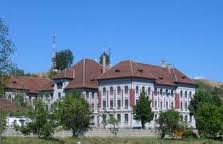
Liceul Industrial Forestier din Blaj – Prima promotie –

Liceul din BlajLa prima  întâlnire anuala!

.

ANUNT

..

Prima promotie a

.

Liceului Industrial Forestier din Blaj –   1966-1971,

organizeaza o reîntâlnire a colegilor si profesorilor

.

Sâmbata 9 Iunie 2012, ora 11.00

.

Grupul Scolar “Timotei Cipariu” Blaj

.

Organiozatori: Nicolae Berghian,  Florin Moldovan, Gheorghe Fratila 

Profesori diriginti: Ioan Man (clasa A)

Miron Mondoc, Ștefan Gore (clasa B)

DIRECTOR: Ing.Virgil PRUNĂ

Profesori:

 prof.dr.Ion Buzași – Limba si Literatura Româna

ing.Aurora Buzași – Materii de Specialitate

prof. Terezia Caragiov – Matematica

prof.univ.dr.ing. Arcadie Hinescu – Materii de Specialitate

ing.Ion Hinescu – Materii de Specialitate

ing.Virgil Prună – Desen Tehnic

Preot prof. Iacob Borcea – Limba Franceza

prof. Ana Bulat,  prof. Nicolae Albu – Limba si Literatura Româna 

prof. Aurel Berar – Fizica

prof. Miron Mondoc – Educatie Fizica si Sport

Virgil Mărculeț – Chimie

 prof. Maria Mărculeț – Matematica

prof. Ioan Man – Istorie, Filozofie

prof. Ștefan Gore – Educatie Fizica si Sport

Gheorghe Cristea – Maistru, Atelier de Tâmplarie

Les printemps

Je te ceinture avec tous les printemps,
J’écris les absoutes sur la neige tricotée dans tes cheveux,
Je cours avec toute la joie à la colline fatigué,
Où les fleurs dansent et le pas de la porte chante.

Je bois la rosée de la maison,
Le berceau moldave de l’enfance,
Je cueille les couleurs du ciel sur une fresque du matin,
Dans le carnaval d’encre des printemps masqués.

Tatiana Scurtu-Munteanu

Sur la colline

Prends les papillons dans tes mains
Et vole avec eux dans le ciel,
Entrons dans la danse avec la fleur de lys,
Egrises-moi dans une gorgée de vin.

Laisse-moi dans la pluie de mai,
Prends ma taille comme un évantail,
Couche le soleil sur la colline,
Quand les souffles courent vers la lune au galop.

Tenons sur nos epaules et nos bras
Le tapis d’herbe fauchée dans la rosée,
Un choeur de cigales chante une serenade,
Nous sommes égarés dans le verger.

Tatiana Scurtu-Munteanu

Este un lucru rău!

George Danciu

Este un lucru rău pe care l-am văzut sub soare, și care se întâlnește des între oameni                         ECLESIASTUL, 6.1

 .

NIMIC NOU SUB SOARE

.

Mulțumiți totdeauna lui Dumnezeu Tatăl, pentru toate lucrurile, în Numele Domnului nostru Isus Hristos.EFESENI, 5.20

Prin El să aducem totdeauna lui Dumnezeu o jertfă de laudă, adică, rodul buzelor care mărturisesc Numele Lui.  EVREI, 13.15

Copilul nu poate să se descurce singur, de aceea este ajutat de cei mari, părinți, prieteni, educatori. Când am fost în clasa primară învățătoarea mi-a purtat mâna în care țineam creionul, ca să învăț corect să aștern pe hârtie primele bastonașe sau litere (multora li s-a întâmplat la grădiniță sau acasă, de timpuriu). Continue reading “Este un lucru rău!”